How To Scale Warehouse Storage Systems With China Suppliers?

Time:2026-09-22 Author:Aria
0%

Scaling warehouse storage is rarely just a purchasing exercise. It is a controlled process involving layout, load capacity, safety, and replenishment speed. For operators asking How To Scale Warehouse Storage Systems, China suppliers can offer broad product ranges and flexible production volumes. Yet lower pricing alone does not create a reliable warehouse. The right decision begins with measured aisle widths, pallet dimensions, ceiling height, and future inventory growth. Small errors become expensive. A rack drawing that ignores forklift turning space may reduce daily throughput.

Experienced buyers normally convert operating needs into a documented specification. It should define steel grade, beam capacity, surface treatment, tolerances, anchoring requirements, and inspection standards. Request production samples, factory photographs, welding records, and load-test evidence before approving a larger order. Independent inspections can verify dimensions and finishes before shipment. Supplier evaluation also deserves attention. Review export history, quality systems, engineering capability, and communication discipline. Ask how design changes are recorded. Ask who accepts responsibility when measurements differ. These questions reveal more than a polished catalog.

A scalable plan may begin with one validated zone, then expand through repeatable modules. Label locations clearly. Leave room for maintenance. Confirm local building, fire, seismic, and workplace safety requirements with qualified professionals. Standards vary by country and facility. Do not assume a supplier’s standard design fits every site. In practice, projects may move quickly after installation, then slow because spare beams, anchors, or replacement parts are unavailable. That lesson is easy to overlook. Include after-sales support, packaging protection, lead times, and total landed cost in the comparison. Reliable growth is not dramatic. It is measurable, documented, and adjusted when warehouse data challenges the original plan.
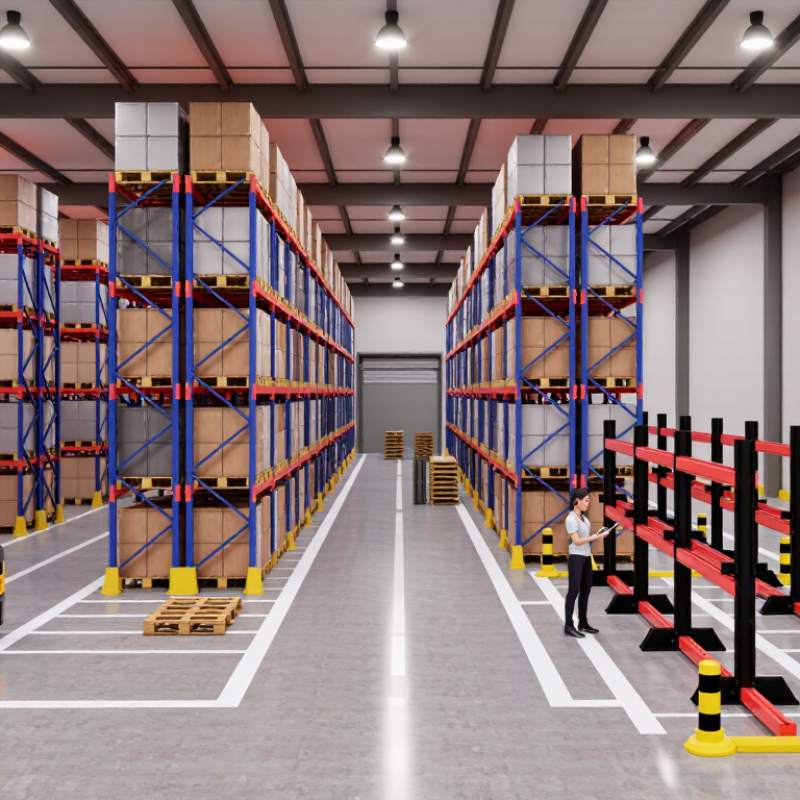
How To Scale Warehouse Storage Systems With China Suppliers?

Define Warehouse Storage Requirements and Scaling Goals

Before contacting China suppliers, define what your warehouse must handle today. Record SKU dimensions, unit weights, carton types, and daily movement. Measure clear height, aisle width, floor load capacity, and emergency access routes. A simple site map often reveals wasted corners and unsafe bottlenecks.

Set scaling goals with numbers, not vague expectations. For example, plan for 30% more inventory within 18 months. Decide whether growth requires additional pallet positions, faster picking, or adjustable shelving. Include storage density, handling equipment, installation time, and maintenance access. I recommend preparing two layouts: a current plan and a growth plan. Suppliers can then quote compatible sections instead of isolated units.

Leave room for uncertainty. Forecasts are rarely perfect. A seasonal product may occupy three times its usual space. Some cartons may also arrive heavier than expected. I once underestimated replenishment space and created unnecessary travel during peak weeks. That mistake changed my planning process. I now request load calculations, material specifications, dimensional tolerances, and installation drawings before approving production. Ask suppliers to confirm testing methods and packaging protection in writing. Sample components should be checked for fit, finish, and stability. Small details matter. Clear requirements make later expansion safer, faster, and easier to control.

Evaluate China Suppliers and Verify Their Manufacturing Capabilities

When scaling warehouse storage systems, supplier evaluation should begin with evidence, not attractive catalogs. Ask for the factory address, production flow, equipment list, and recent project references. A video tour helps, but an in-person audit reveals more. Check whether steel cutting, welding, coating, and assembly follow controlled procedures. Look for marked workstations, calibrated measuring tools, and traceable material records. If workers cannot explain inspection points, capacity may exist only on paper. That warning matters.

Request material certificates, welding procedures, coating reports, and documented quality checks. Compare these records with the drawings and agreed specifications. For a pallet rack, verify beam dimensions, upright thickness, connector design, and stated load ratings. Ask how loads were tested and whether an independent inspector witnessed the process. A small production batch can expose uneven welds, rough coating, or poor packaging before a large order creates expensive delays. Do not accept generic test reports without matching product details.

Manufacturing capacity also includes planning discipline. Review monthly output, lead times, backup equipment, skilled labor coverage, and responses to design changes. Speak with the quality manager, not only the sales representative. Clear answers build trust. Vague promises do not. I have seen suppliers pass a remote review but struggle with consistent dimensions during mass production. My own assessment can be incomplete, too. Recheck critical findings through samples, factory records, and third-party inspection before expanding the order. A reliable partnership develops through repeated proof, not one successful shipment.

Select Storage Systems, Materials, and Customization Options

Scaling warehouse storage with China suppliers requires more than comparing prices. Select the storage system around actual operating conditions. Measure aisle widths, ceiling height, pallet dimensions, forklift turning radius, and expected load growth. A rack designed for cartons may fail under dense pallet loads. Start with a clear layout and load table.

Material selection affects safety and service life. Cold-rolled steel offers consistent dimensions, while heavier structural steel suits demanding applications. Ask suppliers for material grades, coating thickness, weld standards, and load-test records. Request production samples before approving a large order. Check beam connections, upright holes, base plates, and surface finish closely. Small defects matter.

Customization should solve a measured problem, not simply add features. Adjustable beams, mesh decking, guardrails, and modular platforms can improve flexibility. Provide drawings with tolerances, hole spacing, load ratings, and installation requirements. Confirm whether local teams can assemble the system safely. A factory audit, video inspection, and independent quality check add useful evidence. Keep every revision in writing.

I once approved a layout too quickly. The racks fit the plan but restricted a turning aisle. That mistake increased installation work. Supplier communication also needs patience. Technical terms can be interpreted differently. Use photographs, marked drawings, and signed specifications. Request packaging details for long-distance transport, especially corner protection and moisture control. Leave room for future expansion, but do not overbuild every section. Overstocked steel can consume capital without improving throughput.

How to Scale Warehouse Storage Systems With China Suppliers

Typical rated load ranges help buyers compare storage systems before requesting supplier quotations. Actual capacity depends on bay dimensions, beam size, material grade, pallet weight, seismic requirements, and local safety standards.

Customization focus: Selective and drive-in racks are suitable for pallet storage, carton-flow systems support high-volume picking, and cantilever racks are designed for long or irregular loads. Confirm the final load rating with structural calculations and supplier test documentation.

Manage Pricing, Quality Control, and International Logistics

Scaling warehouse storage systems with China suppliers requires more than comparing unit prices. In sourcing projects, I have found that a low quotation can hide tooling, packaging, inspection, or inland transport costs. Request a line-by-line price sheet. Check steel thickness, coating type, load capacity, and carton dimensions. A sample rack should be assembled before mass production. Small gaps often reveal larger quality risks.

Quality control needs measurable checkpoints. Share approved drawings with tolerances, weld requirements, surface standards, and loading tests. Use a pre-production sample and a mid-production inspection. Photos are useful, but they cannot replace physical testing. An independent inspector can verify dimensions, finish, quantity, and packing condition. Still, inspection is not perfect. I once underestimated the effect of humid storage on painted components. The specification needed revision.

International logistics should be planned alongside production. Confirm the factory pickup date, port options, container capacity, and required export documents. Nested parts may reduce volume, while stronger packaging prevents crushed corners during handling. Ask suppliers to provide pallet dimensions and gross weights before booking freight. Build buffer time around holidays, port congestion, and customs questions. A shared shipment schedule helps everyone track approvals, production, inspection, and delivery. Keep payment milestones linked to documented progress, not promises. When prices change, record the reason and approve it in writing.

Install, Test, and Expand the Warehouse Storage System

Scaling warehouse storage with China suppliers works best as a controlled installation, not a single purchase. Start with measured data: aisle width, pallet dimensions, ceiling height, turnover, and floor capacity. Send drawings with tolerances, loading requirements, and surface conditions. A supplier should provide calculations, material specifications, inspection points, and a clear packing list. Ask for sample connections before full production. Small mismatches become expensive during installation. Our first layout underestimated forklift turning space. That mistake delayed commissioning and forced two bays to move.

During installation, mark every upright position on the floor and check anchors against approved drawings. Use calibrated tools to verify beam levels, frame plumb, and bolt torque. Photograph each stage. These records support maintenance and supplier discussions. Testing should include empty-bay inspection and progressive loading with known pallet weights. Watch for uneven deflection, damaged welds, loose fasteners, and interference with sprinklers or lighting. Do not accept a neat appearance as proof of capacity. A practical test is better. An independent engineer should review calculations when loads are high or layouts are complex.

After several weeks, compare actual throughput, picking time, damage rates, and unused locations. Expand in modules while preserving fire routes, forklift clearances, and emergency access. Keep spare components and serial records. When reordering, confirm changes in steel grade, finish, and dimensions with the China supplier. Production batches can vary. That deserves attention. Set acceptance criteria before payment, including dimensional tolerances, load signage, packaging condition, and replacement response times. Record every approved change before adding another storage bay.

How To Scale Warehouse Storage Systems With China Suppliers? - Install, Test, and Expand the Warehouse Storage System

Phase System Area Planning Dimension Initial Configuration Expansion Target Typical Timeline Acceptance Test Scale Trigger
1. Assess Storage profile SKU count, pallet type, load weight, turnover rate Up to 1,000 SKUs; standard pallets; loads up to 1,000 kg Up to 3,000 SKUs; mixed pallet and carton storage 3–5 working days Verified SKU master, dimensions, weights, and ABC classification SKU count exceeds 80% of planned capacity
2. Design Selective pallet racking Pallet positions and vertical utilization 500 pallet positions; 4 storage levels; 6.0 m clear height 1,000 pallet positions; 5 storage levels where permitted 5–10 working days Rack layout, beam levels, floor loading, aisle widths, and safety clearances approved Average occupancy reaches 85%
3. Source Supplier and quality control Material grade, load rating, coating, documentation Steel certificates, drawings, installation instructions, and packing list required Approved repeatable specification for additional bays and accessories 2–4 weeks for production preparation Sample inspection, dimensional check, weld/finish review, and document reconciliation Inspection pass rate ≥95%
4. Install Racking and material-handling equipment Installation productivity and safety Two trained installers; 80–120 pallet positions per day Add installation teams without changing bay geometry or safety procedures 5–8 working days for 500 positions Anchor torque, plumbness, beam locking, aisle clearance, and signage checked Zero open critical safety defects
5. Test Load and structural verification Rated load, deformation, stability, and repeatability Test representative bays at the specified maximum load Repeat the same test protocol for every added rack block 1–2 working days No permanent damage, stable frames, secure beams, and documented test results 100% of tested bays pass
6. Operate Put-away and picking workflow Throughput, travel distance, and inventory accuracy 80 pallet movements per shift; ≥98% inventory accuracy 160 pallet movements per shift using additional labor or equipment 2–4 weeks of monitored operation Cycle counts, order sampling, travel-time study, and damage-rate review Throughput exceeds 75% of shift capacity for 4 weeks
7. Expand Additional rack blocks and accessories Modularity and installation compatibility Add 100–200 pallet positions per expansion cycle Reach 1,000 pallet positions without relocating core receiving and dispatch zones 1–3 weeks per expansion cycle Dimensional match, connection compatibility, aisle access, and updated layout verification Available floor area reaches 80% utilization
8. Review Performance and total cost Capacity utilization, safety, damage, and cost per position Monthly review of occupancy, incidents, damage, and labor productivity Quarterly capacity plan linked to forecast demand and available floor space Monthly and quarterly KPI dashboard confirms service level, safety compliance, and cost performance Utilization, safety, or service KPI misses target for 2 periods
Key planning assumptions: Final dimensions, load ratings, aisle widths, anchoring requirements, fire protection, and local safety compliance must be confirmed through a site survey and qualified engineering review before installation.

FAQS

What information should be defined before contacting storage system suppliers?

Record SKU dimensions, unit weights, carton types, and daily movement. Measure ceiling height, aisle width, floor capacity, and emergency routes. Create a simple site map. It may reveal wasted corners and unsafe bottlenecks.

How should warehouse growth goals be planned?

Use numbers instead of vague expectations. For example, plan for 30% more inventory within 18 months. Decide whether growth needs more pallet positions, faster picking, or adjustable shelving. Prepare current and future layouts.

Why should warehouse plans include uncertainty?

Forecasts are rarely perfect. Seasonal products may need three times their normal space. Cartons may also arrive heavier than expected. I once underestimated replenishment space. That mistake increased travel during busy weeks.

What should a supplier quotation include?

Request a line-by-line price sheet. Check steel thickness, coating type, load capacity, carton size, packaging, inspection, and inland transport. A cheap quotation may hide important costs. Prices should have written explanations.

How can storage system quality be checked?

Share approved drawings, tolerances, weld requirements, surface standards, and loading tests. Inspect a pre-production sample and a mid-production batch. Photos help, but physical testing is stronger. Small gaps can signal larger risks.

What logistics details should be confirmed before shipping?

Confirm factory pickup dates, port options, container capacity, and export documents. Ask for pallet dimensions and gross weights. Nested parts may reduce volume. Strong packaging can prevent crushed corners. Allow time for delays.

How should installation and testing be managed?

Mark every upright position on the floor. Check anchors against approved drawings. Verify beam levels, frame alignment, and bolt torque with calibrated tools. Test empty bays first, then load them progressively with known pallet weights.

How should the system be expanded after installation?

Compare actual throughput, picking time, damage rates, and unused locations after several weeks. Expand in modules. Preserve fire routes, forklift clearances, and emergency access. Keep spare parts and serial records. Production batches can vary. That deserves attention.

Conclusion

How To Scale Warehouse Storage Systems with China suppliers begins with clearly defining storage requirements, inventory characteristics, workflow targets, space limitations, and future expansion goals. A practical plan should estimate current capacity and expected growth, then compare supplier experience, production equipment, engineering support, certifications, and quality management processes. Factory audits, sample reviews, and clear technical specifications can help verify whether a supplier is capable of delivering reliable, scalable solutions.

The next steps include selecting suitable racks, shelving, bins, platforms, or automated components, while deciding on materials, load ratings, dimensions, safety features, and customization needs. Buyers should manage pricing through detailed quotations, confirm inspection standards, and coordinate packaging, documentation, shipping, and installation planning. After delivery, the system should be installed and tested for stability, capacity, accessibility, and workflow efficiency. Performance data and user feedback can then guide phased expansion, allowing the warehouse to grow efficiently without unnecessary disruption or costs.

Aria

Aria

Aria is a dedicated marketing professional with a deep passion for innovative strategies and a keen understanding of our company's product offerings. With a wealth of experience in the industry, Aria excels at crafting engaging content that highlights the unique features and benefits of our......