Explore our elite selection of industrial-grade heavy duty storage racks, structural components, and containment units engineered for spatial maximization.
The global logistics landscape is undergoing an unprecedented shift. As land prices rise and urban warehouses become increasingly expensive, logistics operators and manufacturing hubs are under intense pressure to optimize their spatial footprint. Mobile storage racks (also known as mobile racking systems, high-density mobile shelving, or motorized mobile pallet racks) have transitioned from specialized engineering solutions to mainstream warehousing essentials.
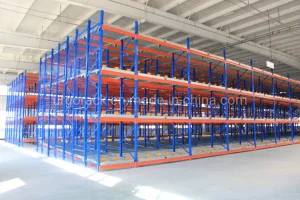
By placing conventional pallet racks on guided mobile carriages, these systems eliminate static aisles. Instead of having multiple dedicated access aisles, mobile racking systems require only one single operational aisle that opens automatically upon user command. This architectural shift yields up to a 100% increase in storage capacity within the exact same structural footprint, or alternatively, reduces construction costs for new storage facilities by up to 50%.
Saves up to 45% of physical floor space compared to selective static rack configurations, drastically reducing site leasing costs.
Boosts storage volume density by 80% to 120%, enabling double the inventory access within cold-storage or micro-fulfillment sites.
Unlike double-deep racking or drive-in racks, mobile systems maintain full pallet selectivity, minimizing picking time delays.
Modern storage system configurations are increasingly intertwined with automated material handling equipment (MHE) and intelligent enterprise management systems. The integration of Artificial Intelligence (AI), the Internet of Things (IoT), and Autonomous Mobile Robots (AMRs) is defining the next generation of mobile storage.
Our global engineering studies analyze key requirements of enterprise buyers. Systems are rated based on operation safety, control automation, and dynamic load adaptation.
A premier global manufacturing leader integrating scientific research and development, manufacturing, sales and services.
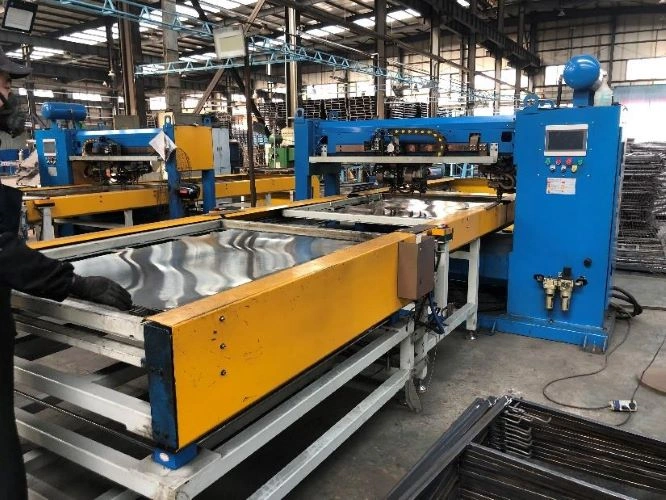
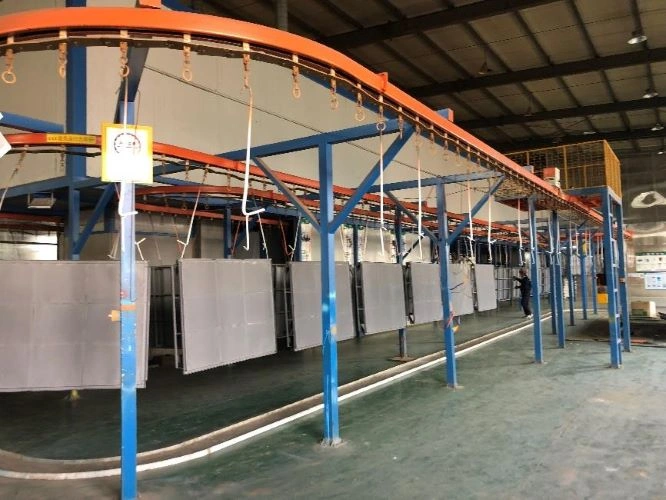
Integrating advanced CAD & Finite Element Analysis (FEA) systems, Shanghai TKS Logistics design and fabricate robust, high-safety mobile racks and logistics equipment. Operating a state-of-the-art production plant covering nearly 10,000 square meters in Shanghai, the company maintains strict quality controls over stamping, drawing, resistance welding, wire cutting, riveting, and advanced machining processes.
The company's core guiding principal is to **save space, improve efficiency, reduce operational costs, and elevate corporate service delivery**. Their products are optimized for critical industrial fields such as automotive manufacturing, cold chains, supermarkets, marine logistics, shipbuilding, electronics, and heavy chemistry.
Understanding how different industrial domains deploy mobile and modular racking systems to address regional floor limitations.
Operating low-temperature cold store units presents massive utility and power costs. Standard static racking requires substantial air space layout just for aisles, wasting expensive refrigerated air. By utilizing mobile storage racks, warehouses compress their footprint by half.
Technical Metric: Minimizes cooling escape volumes by compacting up to 90% of physical airspace, reducing overall refrigeration utility expenses by 35%-40%.
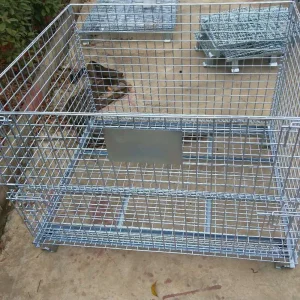
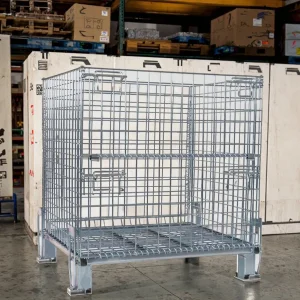
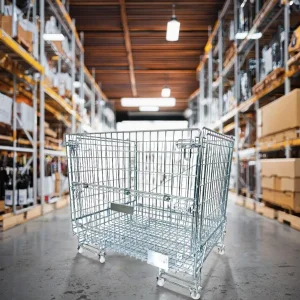
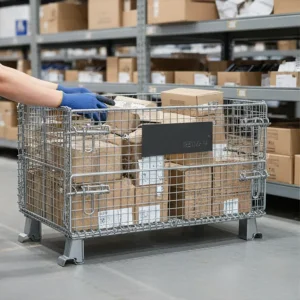
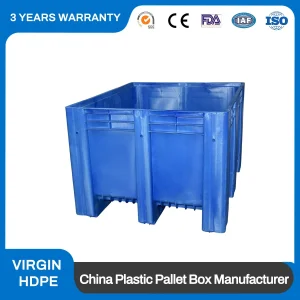
Auto manufacturing operates under extremely strict Just-In-Time (JIT) protocols. Materials like metal parts, castings, and sub-assemblies are stored in heavy steel wire stillages and collapsible transport boxes that require robust structural support.
Technical Metric: Mobile carriages are designed to withstand structural loads exceeding 24 tons per bay while keeping individual components fully selectable.
MFCs situated inside metropolitan urban zones cope with extreme rental costs. These facilities process massive varieties of SKUs that must be accessed rapidly by sorting personnel.
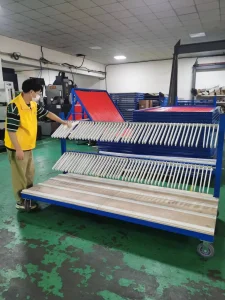
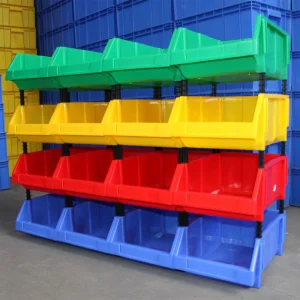
Technical Metric: Integrating small plastic parts storage bins and modular shelves with automated mobile bases decreases operator travel distances, improving picking productivity.
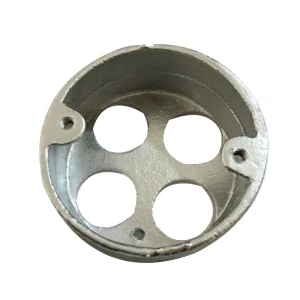
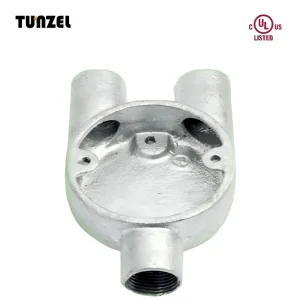
For raw materials and oversized parts, standard lightweight shelving is inadequate. Using heavy-duty steel reinforced pallets and industrial circular conduits provides critical safety support.
Technical Metric: Heavy duty hot-dip galvanized components withstand extreme physical shear forces and protect electrical networks through malleable iron circular loop boxes.
When investing in high-density mobile racking systems, enterprise procurement, facilities managers, and engineering teams must evaluate structural components based on strict safety and design compliance benchmarks:
Because mobile racks consolidate dynamic weight load configurations onto a smaller total footprint, structural subfloors experience significantly higher concentrated point loads. Before installation, accurate soil bearing, slab depth (typically requiring minimum 200mm reinforced concrete), and precise rail leveling (less than 1mm deviation per meter) must be verified.
High-density automated mobile racking systems must comply with local safety requirements (such as OSHA or EN 15095). Crucial fail-safes include access-point light barriers, carriage-mounted photoelectric safety beams, mechanical emergency-stop bumpers, and manual override capabilities during power disruptions.
Enterprise buyers must decide between *in-floor guided rails* and *railless systems*. Rail-guided options support much heavier load profiles (up to 30 tons per bay) and are suitable for deep-lane pallet setups. Railless solutions utilize poly-wheels directly on concrete, reducing installation downtime, but are constrained to lighter payload capacities.
Addressing common technical inquiries and operational concerns regarding industrial mobile storage systems.
Explore our supporting structural components, heavy-duty industrial pallets, and durable electrical fittings necessary for robust facilities setup.
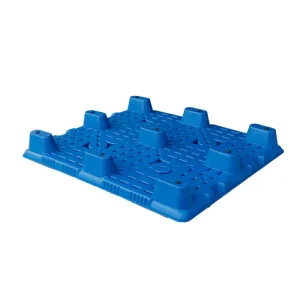
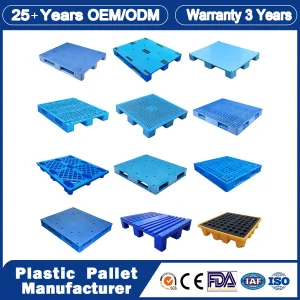
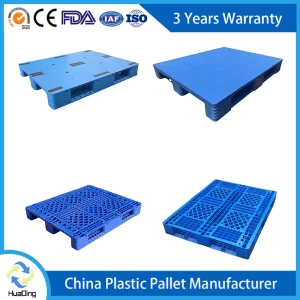
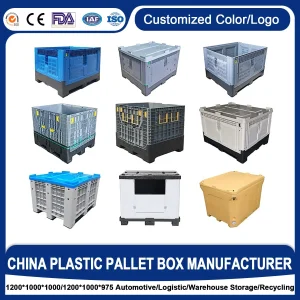
Shipping high-density logistics apparatus globally demands structural compliance with regional design standards. Products exported by **Shanghai TKS Logistics Technology Co., Ltd.** are designed to perform reliably across key international regulations:
Strict guidelines specifying structural deflection limits under load, layout requirements for aisle clearance, and safety-label protocols for pallet racking operations.
Governing materials specs, seismic structural design, welding standards, and the calculation of maximum load capacities under continuous dynamic strain.
Adherence to seismic mitigation guidelines, high corrosion-resistance tolerances for hot-humid coastal climates, and rigorous material durability testing.
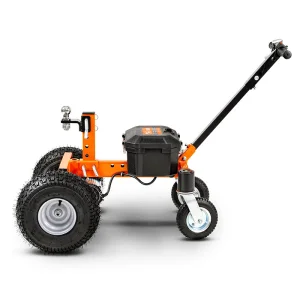
From raw steel and polymer selection to custom fabrication, all batches undergo tension-testing, load limit certification, and anti-corrosion coating assessments. With our specialized team of four technical engineers and four quality control specialists, we ensure that every storage rack, iron pallet, stillage container, and transportation dolly arriving at your location is built to last.
Our strategic export facilities in Shanghai guarantee rapid container consolidation, customs clearance, and secure ocean transport to destination ports worldwide.
 TKS Logistics