Direct from our advanced Shanghai manufacturing floor. Industrial-grade reliability designed to optimize return logistics and warehouse efficiency.
Why Tier-1 industrial buyers focus on East Asian supply chains for heavy-duty storage infrastructure.
The global warehousing landscape is undergoing a massive structural shift. Driven by the expansion of e-commerce, automated storage and retrieval systems (AS/RS), and strict safety protocols, the demand for high-load, high-precision shelving has never been greater. For supply chain officers and procurement executives, choosing the right manufacturing partner is not just a price negotiation; it is a critical calculation of material durability, structural engineering compliance, and geopolitical supply chain resilience.
Top-tier factories rely heavily on certified carbon steel (such as Q235B or Q355B), providing high tensile strength and yield performance under intense operational loads. This guarantees deflection rates fall strictly within the safety standards of L/200.
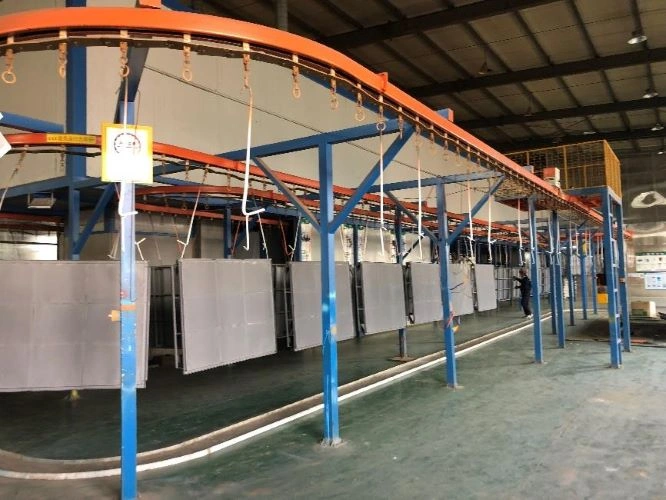
Thermoplastic electrostatic powder coatings applied in high-throughput lines protect steel structures from moisture, chemical abrasion, and mechanical impacts, reaching over 500 hours of salt spray testing for rugged storage environments.
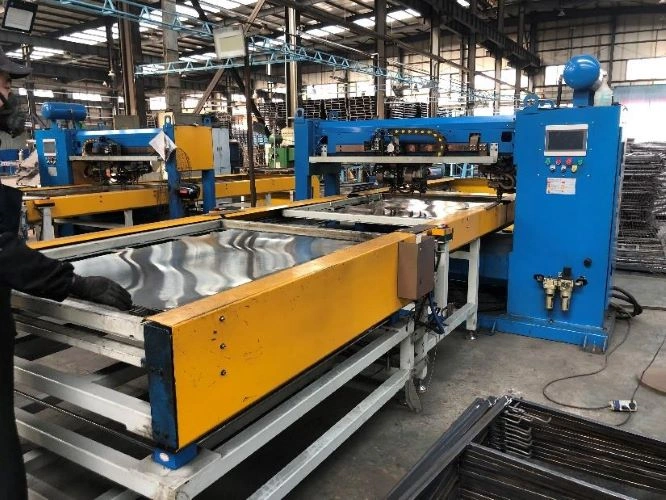
China's industrial warehousing equipment factories have successfully made the transition to Factory 4.0 principles. Advanced facilities use automated laser cutters, robotic welding units, and continuous cold roll-forming lines. This automated manufacturing architecture delivers a dual benefit: it minimizes the margin of error in component dimensions (essential for system integration with AS/RS systems) and keeps manufacturing speeds fast despite raw material price variations.
Your Premier Partner for Integrated Storage Systems and Logistics Equipment Engineering
Shanghai TKS Logistics Technology Co., Ltd. is a professional logistics equipment manufacturer integrating scientific research and development, manufacturing, sales and services. The main products are: logistics trolleys, storage cages, iron packaging boxes, storage racks, turnover pallets, household appliances, pet products, and other products. The production plant covers an area of nearly 10,000 square meters and has 70 employees. It is located in Shanghai City.
Our company has a professional management and technical team, 4 technicians and 4 quality management personnel. It has excellent equipment for stamping, drawing, resistance welding, wire cutting, riveting, and machining.
The company is market-oriented, and has absorbed advanced corporate planning and management concepts, with the aim of saving space, improving efficiency, reducing costs, and improving customer service. The products developed are mainly used in automobiles, supermarkets, logistics, warehousing, machinery, shipbuilding, home appliances, light industry, chemical industry, and other fields. It can meet the different needs and usage habits of different customers for similar products, and provide you with comprehensive tailor-made services. Based on the principle of "quality first, customer first", the products are exported to Europe, America, and Japan, and have won unanimous praise from customers.
How IoT integration, automation compatibilities, and eco-friendly standards are shaping the future of physical storage units.
Modern warehouse shelving is no longer just static steel structures. To meet the demands of fast-moving global supply chains, industrial racks are evolving into dynamic, intelligent nodes. The technology roadmap for storage solutions centers around three primary pillars:
As modern warehousing transitions toward fully automated crane and shuttle systems, tolerance requirements for steel racking have become incredibly tight. Traditional roll-formed shelving with tolerance variances of 3.0mm can lead to automated cranes jamming. Modern Factory 4.0 facilities work within a 0.5mm tolerance range using specialized cold-roll machinery, preparing every rack system for immediate AGV (Automated Guided Vehicle) integration.
Next-generation heavy-duty racks feature built-in strain gauges, optical sensors, and RFID locators. These smart elements monitor structural load stresses in real-time, sending immediate alerts to warehouse management software (WMS) if a pallet slot exceeds safety thresholds or is damaged by forklift impacts.
Eco-friendly requirements are now standard in global tenders. Leading manufacturers have phased out traditional liquid solvent painting in favor of zero-VOC, fully recyclable electrostatic powder coating. In addition, using eco-friendly polymers in parts like collapsible pallet sleeve containers and plastic block pallets helps reduce carbon footprints across long-term logistics cycles.
Custom setups designed to optimize workflow, protect materials, and maximize floor space across industries.
| Target Industry | Primary Storage & Logistics Challenges | Recommended Equipment & Infrastructure | Key Operational Benefit |
|---|---|---|---|
| Automotive Parts Logistics | Heavy payload handling, protection of sensitive electronic modules, rapid sub-assembly cycles. | Steel pallet sleeve containers, heavy-duty iron packing boxes, custom stillages. | Safe stacking, protection of delicate components, and streamlined line-side supply. |
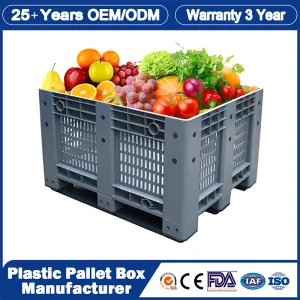
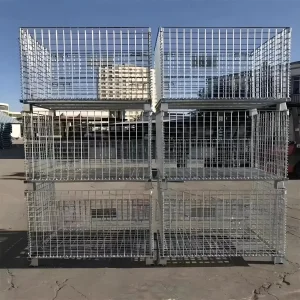
| Food & Cold Chain | Corrosive condensation, low-temperature embrittlement, compliance with strict hygiene standards. | Stainless steel wire cages, nestable vented bulk plastic containers, Q345/Q355 grade steel racking. | Optimal air circulation, mold resistance, and stable structural integrity down to -30°C. |
| E-commerce & 3PL Fulfillment | High SKU variety, fast picking rates, high warehouse employee walking fatigue. | Multi-tier order picking carts, lightweight folding dollies, adjustable medium-duty steel shelving. | Reduced order cycle time, optimized picking efficiency, and easy adjustment for new SKU layouts. |
| Heavy Industrial Manufacturing | Oversized or irregular materials (pipes, sheets, molds), high physical impact risks. | Heavy-duty cantilever racking, structural steel block pallets, high-strength storage cages. | Maximizes vertical space for long stock, ensures forklift safety, and stands up to demanding, continuous use. |
A checklist for procurement professionals to evaluate potential storage and racking manufacturers.
Ensure the supplier designs and manufactures products in strict accordance with standard codes: FEM 10.2.02 (Europe), RMI standards (US), or AS4084 (Australia). Ask for actual physical test reports on stress limits and structural stability.
A professional factory must have in-house testing equipment: universal tensile testing machines, salt spray test boxes, and coating thickness gauges. Relying on visual inspections alone can lead to quality issues downstream.
Racking and shelving components are heavy and bulky. Setting up production near major container hubs (like Shanghai Port) reduces inland transit fees and avoids delays, keeping total landed costs down.
Explore our highly durable, structural steel products built to maximize storage space and streamline heavy-duty operations.
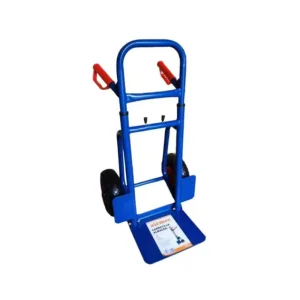
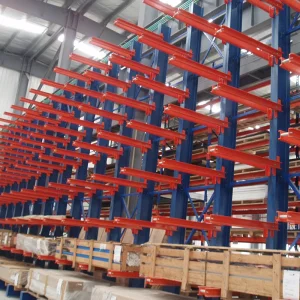
Crucial engineering and logistics details addressed by our technical staff to assist in your next procurement cycle.
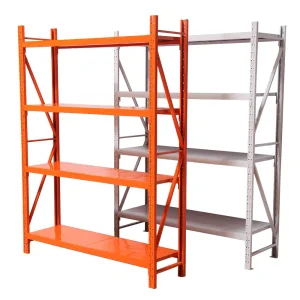
Q235B is the standard carbon structural steel used for medium-duty shelves and standard pallet racking, offering excellent weldability and processing properties. Q355B features a higher yield strength (355 MPa compared to 235 MPa). It is preferred for heavy-duty cantilever systems, tall AS/RS structures, or low-temperature cold chain applications where maximum strength-to-weight ratio is required to avoid structural failures.
We use automated resistance welding machinery along with robotic MIG/CO2 welding lines. This combination ensures consistent weld penetration, prevents blow-through, and guarantees uniform weld seams. This process is monitored under our strict quality management system, consisting of dedicated QA inspectors checking every production batch.
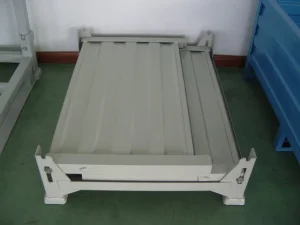
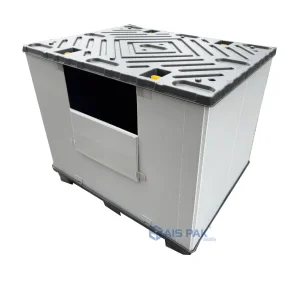
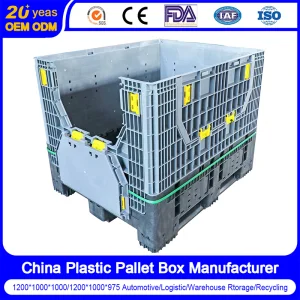
Collapsible sleeve containers offer a high return ratio (typically 1:4 or 1:5). This means that during return logistics, empty containers take up up to 80% less space, dramatically reducing shipping costs. Unlike wood, they also do not require heat treatment or ISPM-15 fumigation, streamlining international customs clearance.
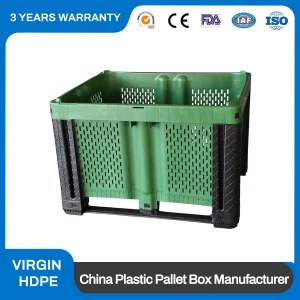
HDPE (High-Density Polyethylene) has superior impact strength at low temperatures, making it the ideal choice for cold storage applications. PP (Polypropylene) has higher stiffness and tensile strength at room temperature, which helps reduce bending under heavy loads in standard warehouses, but can become brittle in cold temperatures.
For highly humid environments, we recommend either hot-dip galvanizing (HDG) or a dual-layer epoxy-polyester powder coating. Hot-dip galvanizing offers self-healing sacrificial protection, while a proper powder coating serves as an airtight barrier to prevent oxidation.
 TKS Logistics