Engineered to maximize footprint efficiency and operational throughput in Northern Algerian industrial sectors.
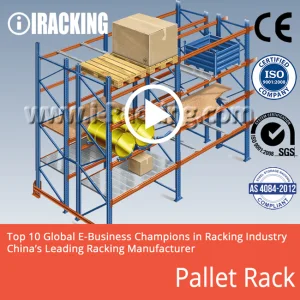
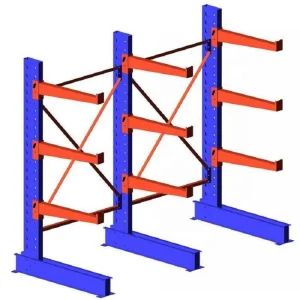
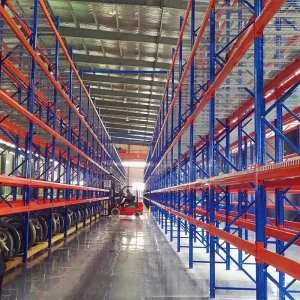
Algiers, the pivotal economic engine and primary maritime gateway of Algeria, is undergoing a dramatic logistics modernization. With the Port of Algiers processing a significant portion of the country's inbound container traffic, and industrial zones like Rouïba, Réghaïa, and Sidi Abdellah expanding rapidly, warehouse operators are facing a dual challenge: skyrocketing urban land values and the urgent need for fast throughput. Traditional floor-stacking methods are no longer viable in a high-demand supply chain ecosystem.
Modern distribution networks serving FMCG, pharmaceutical manufacturing, automotive assembly, and cold chain sectors in the Wilaya of Algiers require precision-engineered storage rack systems. By transitioning to vertical structural steel racking, businesses can immediately multiply their storage capacity by up to 300% without expanding their building footprint. This structural upgrade is key to keeping pace with Algeria’s national economic diversification and import-substitution strategies.
Convert inefficient warehouse configurations into organized, high-density storage zones. Custom height-to-width configurations tailored for European and ISO pallet dimensions.
Modular racking structures allow flexible configuration adjustments as product mixes and cargo volumes change over seasonal demand spikes.
Engineering storage racks for Algiers requires strict adherence to seismic safety standards. Northern Algeria, particularly the Algiers region, is classified under Zone III (high seismic activity) according to the Algerian Earthquake Engineering Regulations (RPA 99 / Version 2003). A warehouse rack is not merely steel shelving; it is an active load-bearing structural frame subject to dynamic static and horizontal lateral forces during seismic events.
To guarantee operational safety and prevent catastrophic collapses, our structural engineering team utilizes advanced finite element analysis (FEA) to calculate the response spectrum of racking arrays. Uprights are formed with robust cold-rolled steel profiles (Q355B or European equivalent S355JR), featuring larger base plates, heavy-duty floor anchor bolts, and comprehensive frame bracing. This ensures that when loaded to maximum capacity, the rack structure possesses the required ductility and strength to withstand localized seismic forces characteristic of the Tell Atlas fault lines.
"Underestimating seismic load criteria in Northern Algeria puts personnel, inventory, and building integrity at high risk. Proper anchoring, structural redundancy, and load distribution calculation are the basic baselines of structural engineering for any supplier serving Algiers."
We source S355JR / Q355B high-tensile structural steel, maximizing plastic deformation capabilities without sudden brittle failure under seismic stress.
Engineered baseplates utilizing mechanical or chemical anchor bolts to securely anchor racks to the reinforced concrete warehouse slab.
Every racking system is shipped with structural calculation dossiers confirming compliance with EN 15512 (FEM) and local RPA regulations.
Warehouses located near the Port of Algiers or along the coastal plain of the Wilaya of Algiers face an atmospheric challenge: high relative humidity coupled with salt-laden marine air. This environment accelerates steel corrosion, which can structurally compromise the load capacity of upright frames and beams over time.
To combat this, we implement a multi-stage surface preparation process followed by thermosetting epoxy-polyester powder coating cured at 200°C. For extreme humidity environments, outdoor transit zones, or cold storage facilities, we supply hot-dip galvanized (HDG) components that comply with ISO 1461 standards. The zinc-iron alloy layer provides both physical barrier protection and sacrificial galvanic protection, ensuring a maintenance-free service life exceeding 15 years.
| Surface Treatment | Coating Thickness | Corrosion Resistance | Best Application for Algiers |
|---|---|---|---|
| Standard Powder Coating | 60 - 80 μm | Moderate (Indoor) | Standard dry warehouses in Rouïba |
| Pre-Galvanized Steel | 15 - 20 μm | High (Indoor/Chilled) | FMCG, retail shelf storage |
| Hot-Dip Galvanized (HDG) | 80 - 120 μm | Extreme (Marine/Humid) | Port of Algiers, seafood cold rooms |
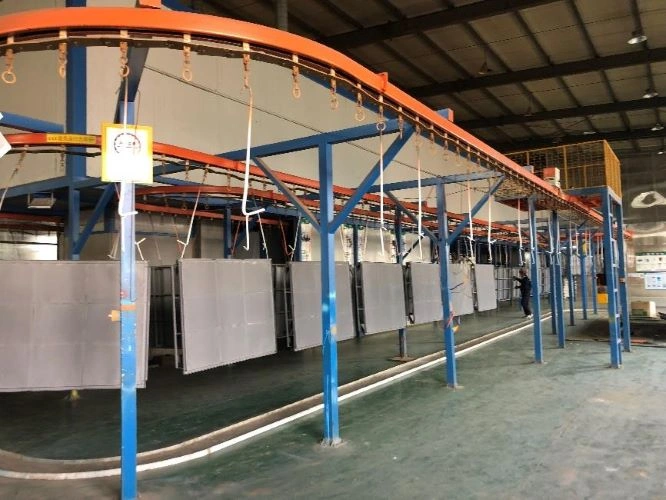
In the global procurement of material handling systems, balancing capital expenditure with strict quality compliance is crucial. China's leading manufacturing sector has transitioned to advanced Industry 4.0 smart production models. Utilizing automated robotic welding arms, high-speed continuous roll-forming lines, and automated packaging lines, we minimize structural dimension deviations down to fractions of a millimeter. This precision is essential for automated warehousing systems like Shuttle Racks and AS/RS, where minor alignment issues can cause system downtimes.
By coordinating direct manufacturing pipelines from Shanghai to Algiers Port, we offer a streamlined logistics and custom-clearance ready packing process. Our export systems protect structural columns against maritime transit wear and ensure efficient offloading upon arrival at Algerian ports.
Shanghai TKS Logistics Technology Co., Ltd. is a professional logistics equipment manufacturer integrating scientific research, product development, high-precision manufacturing, global sales, and engineering services. Our production facility, covering nearly 10,000 square meters in Shanghai, employs over 70 dedicated personnel, including a core team of senior structural design engineers and quality control managers.
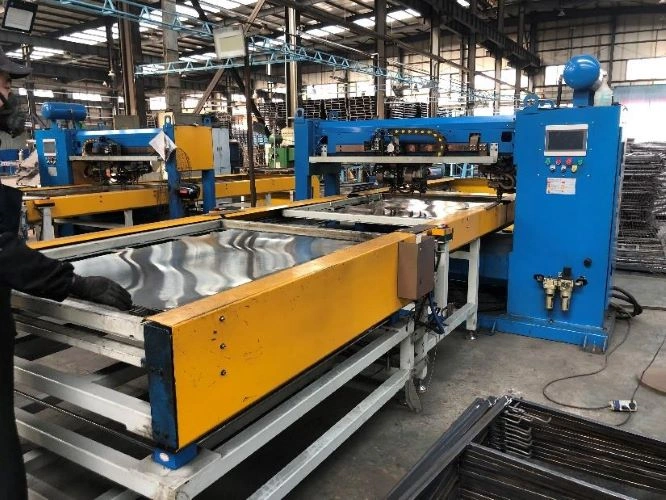
Our production floor features stamping, drawing, resistance welding, wire cutting, precision riveting, and CNC machining equipment. Driven by our design principle of "maximizing space, boosting operational throughput, and lowering capital costs," our products serve logistics hubs, automotive assembly lines, cold chains, supermarkets, and chemical industrial plants globally.
We work to ensure that all customized installations match the specific operational workflows and local regulatory guidelines of our global clientele. Supported by strict Quality Management Systems (QMS), our structural systems are exported to Europe, North & South America, Japan, and growing logistics markets across North Africa.
Export Entity & Trademark
Shanghai TKS Logistics Technology Co., Ltd.
Choosing the correct storage layout depends on factors like SKU diversity, throughput speeds, floor area, ceiling heights, forklift configurations, and budget limits. Below is a comparative matrix to help warehouse planners in Algiers make informed decisions.
| Racking Concept | Space Utilization | Selectivity (SKU Access) | Ideal Forklift Type | Key Use Case in Algiers |
|---|---|---|---|---|
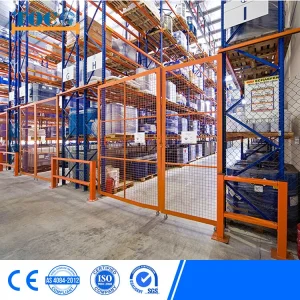
| Selective Pallet Racks | Low to Moderate (approx. 40%) | 100% (Immediate Access) | Standard Counterbalance / Reach Truck | General logistics hubs, retail depots, mixed FMCG distribution. |
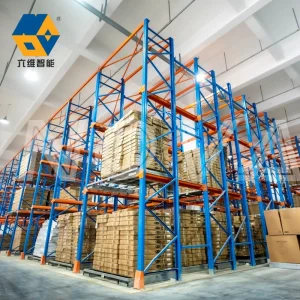
| Drive-In Racking | High (up to 75%) | Low (LIFO system) | Reach Truck / Counterbalance | Cold storage facilities, seasonal goods, bulk homogenous stock. |
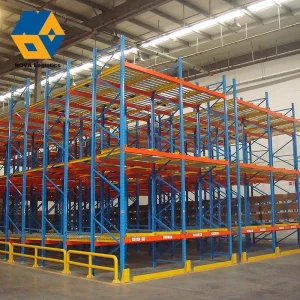
| Radio Shuttle Racks | Very High (up to 85%) | Moderate (FILO / FIFO) | Forklift load + Automated Shuttle | Large-scale pharmaceutical and food distribution cold stores. |
| Cantilever Racks | Optimized for long loads | 100% for long profiles | Side Loader / Forklift | Construction materials, metal sheets, PVC piping distribution. |
| Automated AS/RS | Maximum (up to 90%) | 100% Automated | Stacker Cranes / Conveyors | High-density industrial manufacturing warehouses. |
Warehousing technology is moving toward automation and real-time inventory tracking. Modern racking systems are no longer passive steel supports; they are designed to interface with advanced Warehouse Management Systems (WMS), Automated Guided Vehicles (AGVs), and Internet of Things (IoT) sensors.
We offer racking designs with integrated rack-sensor mountings, automated shuttle rails, and precision-guided alignment profiles. Adding laser-guided safety rails, barcode tracking plates, and weight-deflection sensors helps turn traditional static warehouses into dynamic logistics hubs, reducing human error and optimizing cycle times.
Tolerances are kept within ±1.5mm to support collision-free paths for reach trucks, smart shuttles, and automated guided vehicles.
Beams can be configured with structural mounting brackets to fit load cells, monitoring real-time load distribution and avoiding overloads.
Predetermined spots on beams and uprights facilitate the integration of RFID tag arrays, enabling quick automated inventory updates.
Explore our range of heavy-duty, medium-duty, and automated storage solutions built to international quality standards.
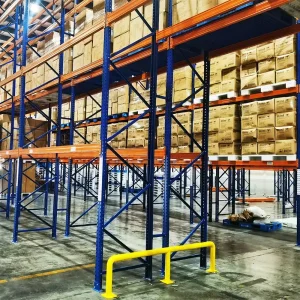
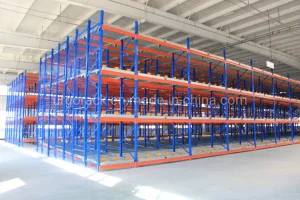
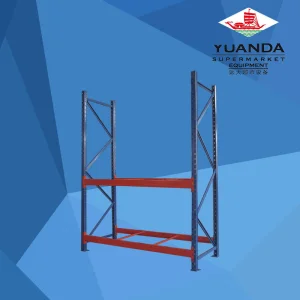
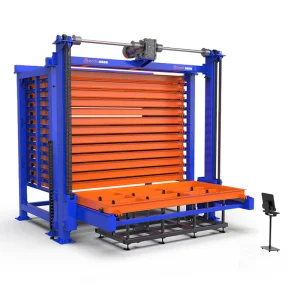
Addressing critical engineering, import logistics, and operational parameters for warehouse operators in Algiers.
 TKS Logistics